Support is planned in the order. Not as a global warehouse claim.
Industrial equipment needs a support path after packing. This page describes how Taibang discusses that path: remote video guidance, possible on-site dispatch, wear-part classes and roller regrind as a service conversation. It does not claim a global spare-parts warehouse, a fixed response clock, or a site-wide warranty period.
WORKSHOP VIEWS / PROJECT DISCUSSION
Look at the details. Define your requirements.
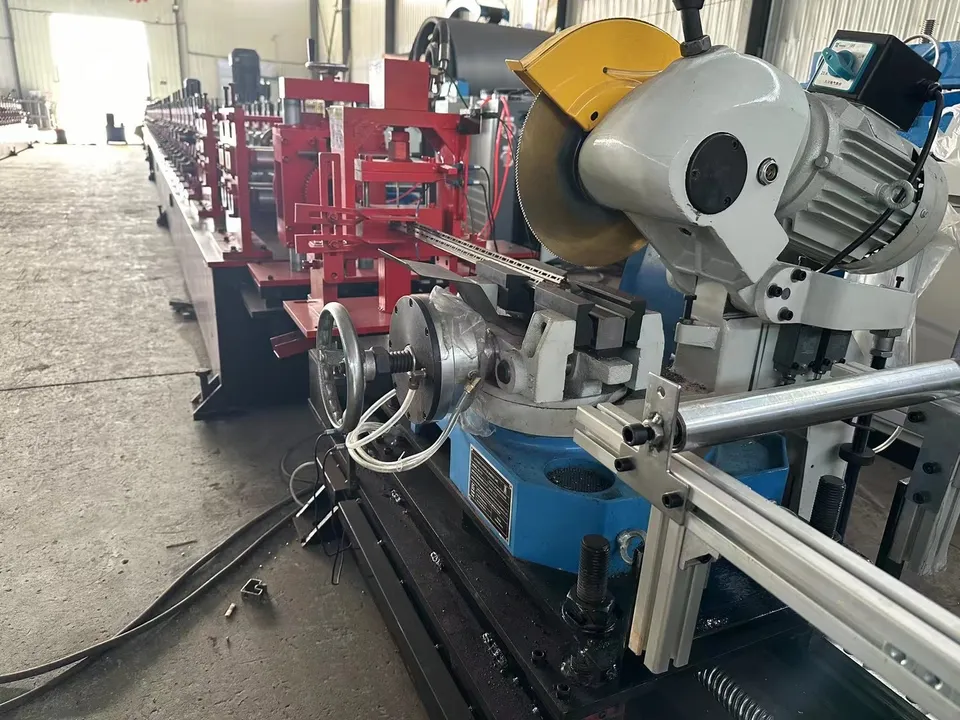
Cutting-station photograph used while discussing wear parts such as cutoff tooling. It does not show a spare-parts warehouse or a stocked inventory.
01Cutting station detail
Remote video guidance
After delivery, first-line troubleshooting is typically discussed by email plus a scheduled video call: camera on the HMI, the fault indication, and the station that stopped. The buyer provides a competent person on site. Remote guidance depends on network access and safety rules at the plant; it is not a substitute for lock-out practice.
On-site dispatch (per contract)
Travel of a technician is not automatic. If the order includes an installation visit, training visit or later call-out, the contract should state who travels, who pays airfare and lodging, visa responsibility, site readiness and the work window. This website does not publish a dispatch timetable.
Documentation language
Agree the language of manuals, electrical drawings and spare-part lists before packing. Unclear documents delay remote help more often than missing hardware.
What this page does not promise
No open-ended support period, no universal warranty duration, and no claim that parts ship from a regional warehouse network. Duration, coverage, exclusions and remedies belong in the signed commercial terms. See Terms of Sale.
WEAR-PART CLASSES — DISCUSSION LIST
Classes to name in the order file.
The following are classes of parts that often appear in a project spare-parts discussion. Listing them here does not mean they are in stock, priced, or included with every machine.
Wear-part classes for project discussion
Class
Why it comes up
Cutoff blades / shear tooling
Cutting stations wear with material, thickness and duty. Identify blade or die type against the agreed cutoff design.
Punches and dies
If the line includes punching, discuss punch/die material, expected duty and how replacements are identified on the drawing.
Sensors
Length, proximity or safety sensors used on the agreed electrical scheme. Record make/model only when the project documents name them.
Relays and control devices
Wear and replacement of relays, contactors or similar devices in the cabinet. Buyer plant standards may constrain substitutions.
A recommended first-fill list, if any, is written for the order. Do not read this table as a catalogue with guaranteed dispatch.
TOOLING LIFECYCLE
Roll regrind as a service discussion.
Forming rolls wear with abrasive coatings, high duty and accidents. Regrind, polish or replacement of a stand’s rolls can be discussed against the original tooling drawing and the current profile sample. Whether work happens in Cangzhou or through a buyer-nominated shop is a commercial choice. This is not a published price list and not a promise that every historical profile remains on the shelf.
During factory acceptance
Training walk-through and spare-part discussion sit in step 06 of the factory-acceptance protocol. Use the trial to photograph stations and to mark parts on the drawing.
Installation interface
Site power, lifting and foundations should already be in the brief. Destination electrical topics are collected on Quality Standards.
Confidential drawings
Replacement tooling still follows the same drawing-confidentiality practice described on About: exchange files privately after the project contact confirms the channel.
Open a support question
Include the machine description, quotation or order reference, and whether you need remote guidance or a commercial discussion about travel. Contact form.
Your next production line
Start with the product you want to make.
Send your drawing, material, finished output target and destination. Build the equipment, inspection and delivery scope into one project brief.