Include the surrounding equipment
- Hydraulic decoiler with coil car
- Precision slitter head with spacers
- Multi-roll leveler
- Recoiler or stacking table
- Scrap winder for edge trim
TAIBANG / EQUIPMENT
Slit, level and cut steel coils into strips or flat sheets. Start with coil width, thickness and the finished strip or sheet specification.
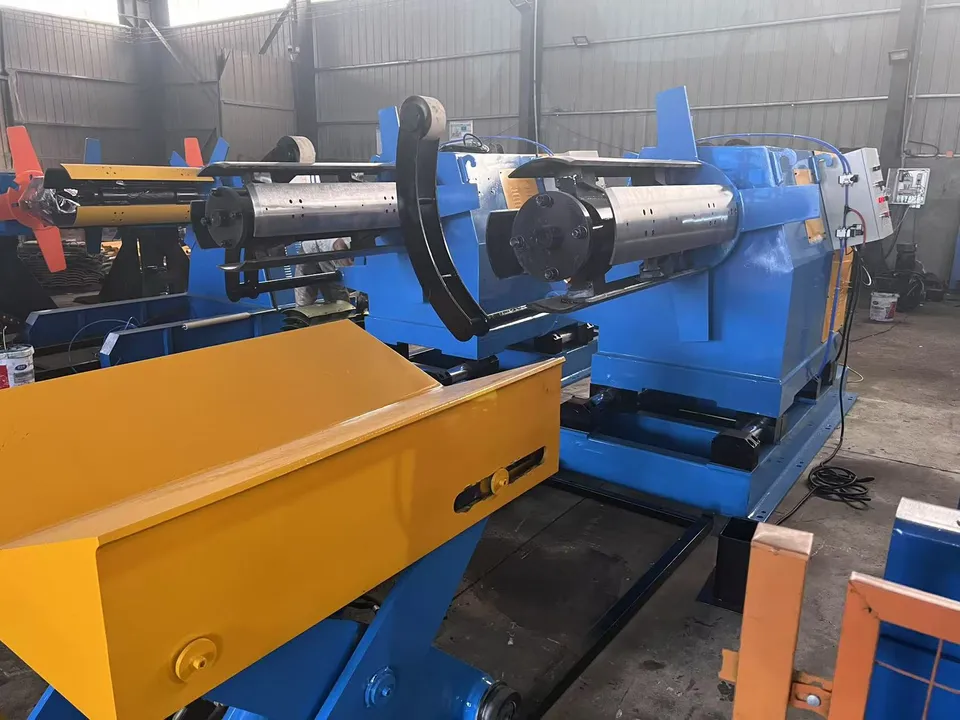
APPLICATION & EQUIPMENT
Slitting and leveling lines are the upstream preparation equipment for roll forming workshops. They convert master coils into narrower strips (slitting) or flat sheets (cut-to-length leveling). These machines feed the downstream roll forming lines with correctly dimensioned material. Specify the master coil dimensions, target strip widths or sheet lengths, material grade and the accuracy requirements for your forming process.
YOUR SPECIFICATION BRIEF
Share the details you have. If a dimension or requirement is undecided, describe the intended finished product.
| Project item | What to include |
|---|---|
| Master coil specification | Coil OD, ID, width, weight and material grade. |
| Target strip widths | Number of strips, width tolerance and edge quality requirement. |
| Sheet dimensions | If cut-to-length: sheet width, length range and flatness tolerance. |
| Material | Steel grade, yield strength, coating and thickness range. |
| Production target | Tons per shift, coil changeover frequency and downstream line feed requirements. |
Speed, power, tooling, tolerances and control components belong in the agreed machine specification. They are not fixed across this equipment category.
ENGINEERING REFERENCE PARAMETERS
The following engineering baseline reflects measured workshop machine parameters and tooling standards. These figures are category references, not a fixed machine specification.
| Engineering Subsystem | Design Range & Workshop Baseline |
|---|---|
| Coil Handling Capacity | Hydraulic decoiler: 3 to 10 ton capacity. Master coil width: up to 1500 mm. Coil OD: up to 1500 mm. Mandrel expansion: hydraulic. |
| Slitting Specifications | Rotary slitter with Cr12MoV (AISI D2) circular blades. Minimum strip width: 30 mm. Number of cuts: up to 10 strips from one master coil. Edge burr: within 0.05 mm. |
| Leveling Specifications | Multi-roll precision leveler: 7 to 17 rolls depending on material thickness. Flatness standard: within 2 mm per meter for standard structural steel. |
| Material & Thickness Baseline | Hot-rolled, cold-rolled, galvanized or prepainted coil. Thickness discussion range: 0.3 to 6.0 mm depending on line configuration. Yield strength: up to structural-grade high-strength coil per project specification. |
| Line Speed Discussion Range | Slitting speed: 20 to 60 meters per minute depending on thickness and number of cuts. Cut-to-length leveling: 10 to 30 meters per minute. |
| Electrical & Destination Standards | Drive motors carry CE attestation (Certificate M.2023.206.C82549) under EU Machinery Directive 2006/42/EC and EMC Directive 2014/30/EU, verified by UDEM International through March 2028. Voltage, PLC controls and safety guarding matched per project. |
SPECIFICATION BOUNDARY
Specifications on this page are either verified brochure baselines or engineering discussion ranges. Final line layout, drive sizing, roll-stand count, tooling material, tolerances and acceptance criteria are confirmed in your signed project offer — they are not fixed by this page. Workshop photos and video show general shop arrangements and mechanical motion; they are not images of a named, quoted machine model.
* Engineering discussion range / workshop baseline; confirmed per signed project. This is upstream preparation equipment that feeds downstream roll forming lines.
FROM BRIEF TO ACCEPTANCE
Confirm master coil specification
Define strip widths or sheet lengths
Review slitter blade configuration
Agree leveling and flatness standard
Plan coil handling and recoiling or stacking
WORKSHOP VIEWS / PROJECT DISCUSSION
Supplied workshop photos are reviewed shop views of coil handling and processing equipment. They show general workshop arrangements, not a specific slitting or leveling line model. Confirm coil dimensions, strip widths and flatness requirements in the project offer.
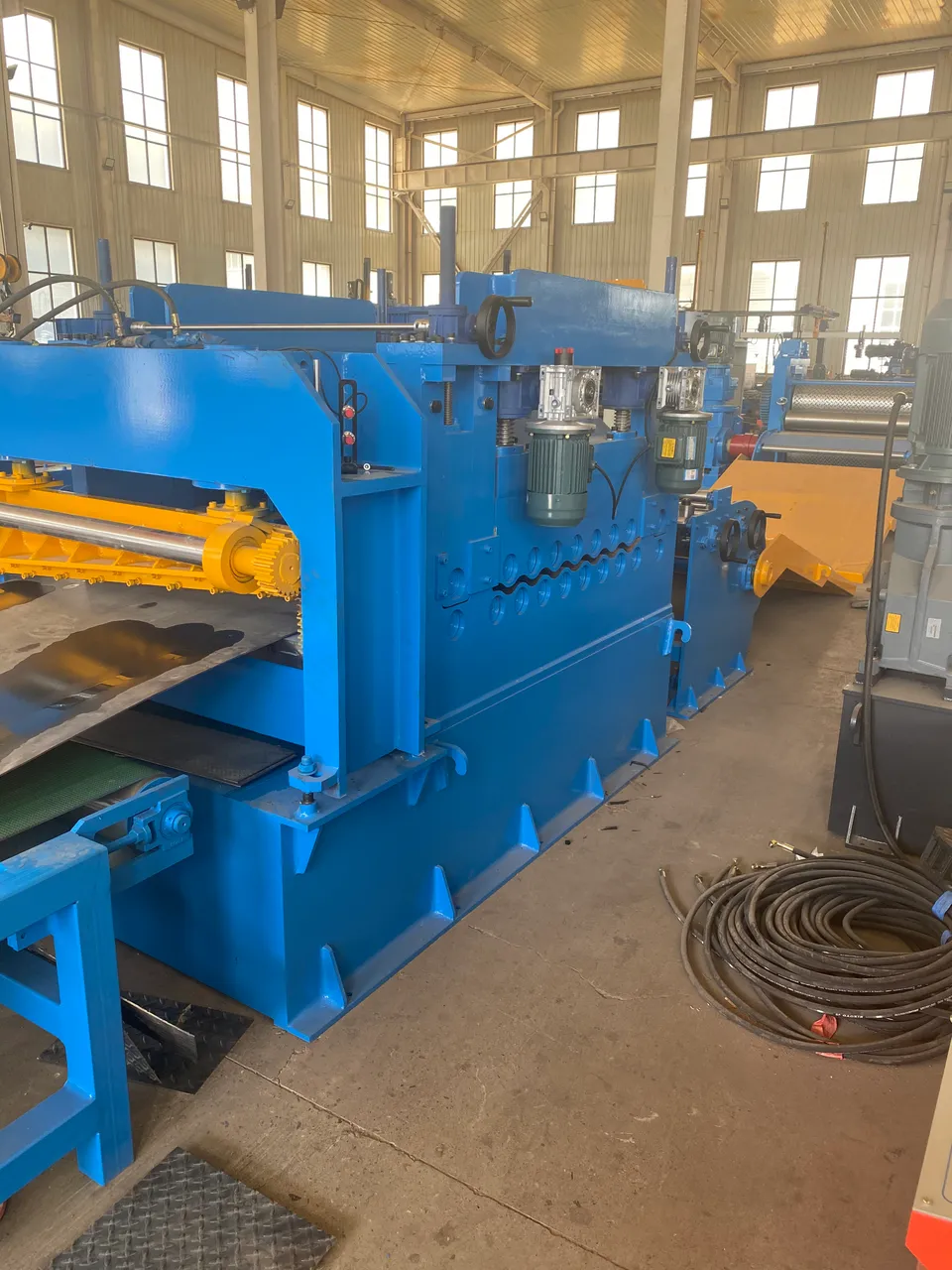
Record trial material, sample measurements, the operating cycle and the documents needed for acceptance.
Inspection planning ↗RELATED EQUIPMENT
These families are often specified together. Open a related line to compare the equipment scope.
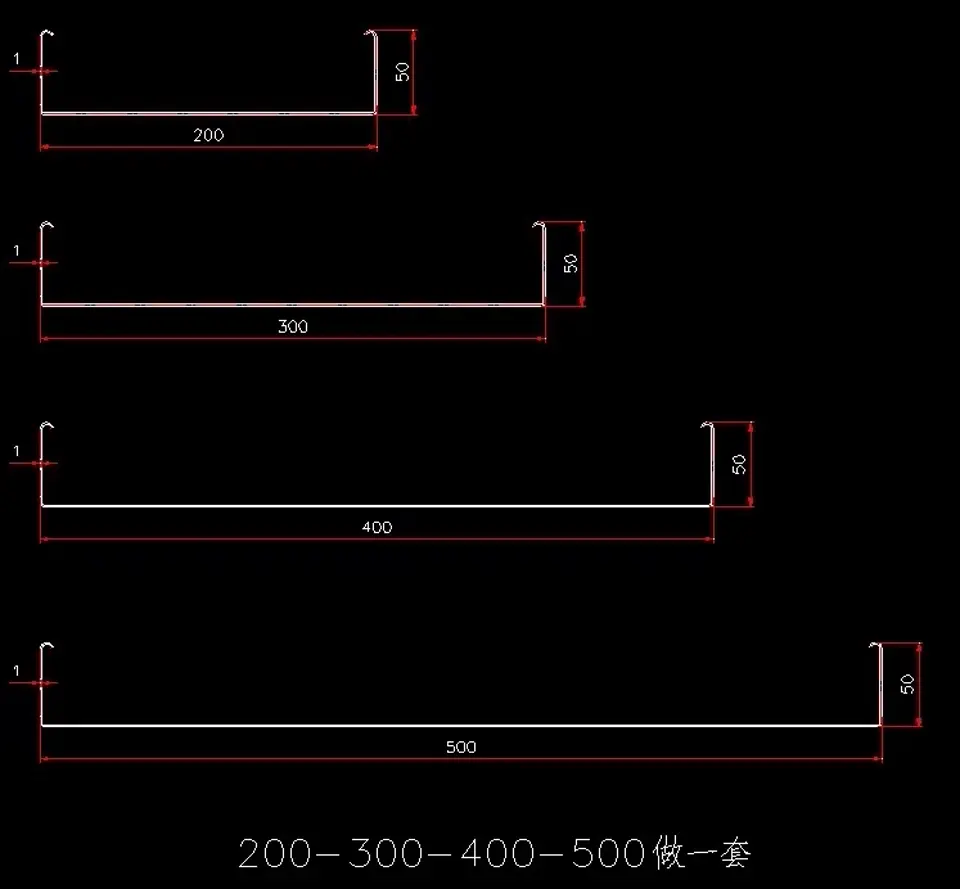
Form U-channel cargo box panels in multiple widths from a single set of tooling. Define the channel width range, flange height and material.
Explore equipment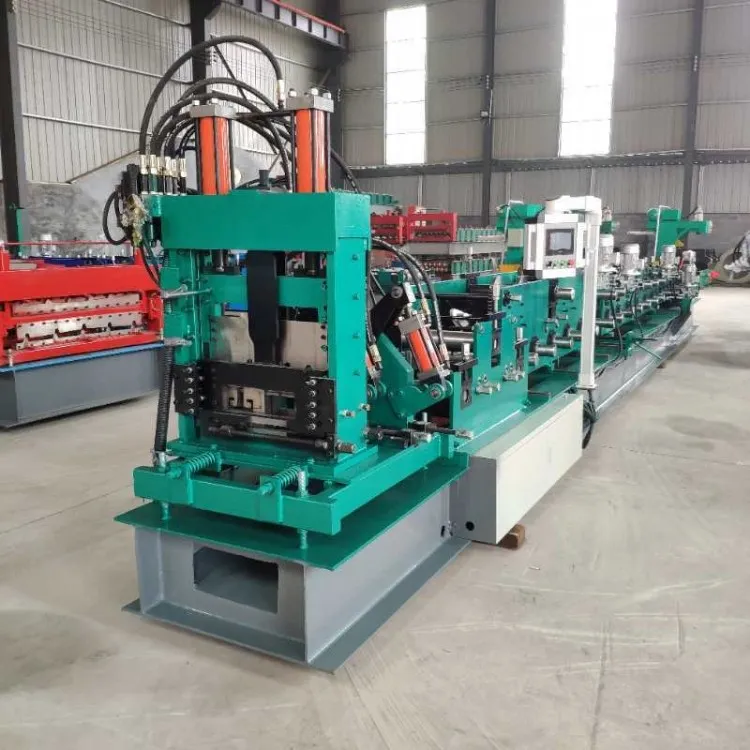
Form C, Z, U and Sigma structural purlins. Start with section sizes, thickness range and hole pattern.
Explore equipmentBEFORE YOU REQUEST A QUOTE
Yes. Describe your intended panel or sheet in text. Contact info@tbrollforming.com to discuss sharing a sketch or reference image; this form does not upload files. Final tooling and pricing need an agreed technical brief.
Discuss the material, product geometry, length mix and full operating cycle. Forming speed alone does not describe finished output per shift.
Ask for a written offer that defines the equipment list, optional items, inspection, delivery terms, installation responsibilities and support scope.
Your next production line
Send your drawing, material, finished output target and destination. Build the equipment, inspection and delivery scope into one project brief.