Box Profile (Trapezoidal Mabati) Roll Forming Machine Guide for Kenya
Technical evaluation and machine planning guide for Kenyan roofing producers manufacturing high-coverage trapezoidal Box Profile mabati. Focuses on feed width matching, anti-oil-canning pan rib formation, commercial coil thickness tolerances, electrical integration, and container shipping to Mombasa.
ENGINEERING NOTICE
Equipment configurations, tooling station counts, motor ratings, and coil feed dimensions are engineered to order. All operational parameters, profile tolerances, and delivery scopes are confirmed per signed project contract and agreed engineering drawings.
Examining operational factors that make Box Profile a high-volume trapezoidal roofing selection for residential, commercial, and agricultural projects in Kenya.
Surface Coverage Efficiency
Box profile designs are engineered to provide wide effective coverage per sheet from standard raw coil widths. This helps maximize roof area coverage per ton of steel, reducing overall sheet counts and handling requirements during roofing installation.
Pan Stiffening to Control Oil-Canning
Because Box Profile incorporates broader flat valley sections between trapezoidal ribs, lighter commercial gauges are sensitive to visual wave distortion (oil-canning). Incorporating subtle longitudinal stiffener ribs helps stabilize wide pans.
Balanced Trapezoidal Geometry
Moderate rib height balances longitudinal beam rigidity with efficient material consumption across each pitch, providing a practical structural solution for typical regional purlin spacing.
MACHINE HIGHLIGHTS
Box Profile Roll Forming Machine: Tooling Considerations
Mechanical design criteria and process considerations evaluated for this profile geometry.
Balanced Center-Outward Roll Progression
Tooling stations are calculated to form trapezoidal ribs smoothly outward from the center, controlling transverse sheet tension and preventing edge flare on wider profiles.
Side-Lap & Anti-Capillary Forming
Tooling design incorporates precise side lap profiles, including capillary break flutes where specified, to support clean sheet interlock and reliable water runoff under regional weather conditions.
Adjustable Entrance Guide System
Entrance guide tables feature lateral adjustment mechanisms to accommodate slit coil width tolerances and maintain accurate strip alignment into the initial forming passes.
Coil Surface Protection
Roller passes receive precision surface machining and protective plating to prevent marking or zinc buildup when processing prepainted galvanized and aluminum-zinc coated coils.
SPECIFICATION CHECKLIST
Technical Checklist: Inputs Required for Box Profile Line Engineering
To prepare an accurate machine layout and tooling proposal, our engineering team requires confirmation of the following technical points:
• Profile Drawing with Rib DimensionsCross-section drawing showing rib count, rib crest width, rib height, pitch spacing, net effective coverage, and overlap geometry.
• Input Coil Width & Edge TolerancesSlit coil feeding width and allowable edge slit tolerances from your raw material supplier.
• Confirmed Decimal Material ThicknessExact thickness range in decimal millimeters (BMT and TCT) covering base steel, metallic coating, and paint primer/topcoat.
• Steel Strength & Coating TypeCoil yield strength (commercial mild steel or high-tensile grade) and coating type (PPGI, PPGL, Aluzinc, or galvanized).
• Decoiler & Outfeed OptionsRequired decoiler capacity (manual or powered) and configuration of finished sheet runout staging tables.
Note: All tooling designs are confirmed via CAD section drawing prior to workshop production.
Stand count ensures gradual deformation without overstressing sheet edges or flat pans.
Roller Tooling Material
Forged carbon steel with protective surface plating
Surface hardness and finish selected to preserve gloss and matte pre-painted coil coatings.
Main Shaft Construction
Solid forged steel shafts, precision machined
Shaft diameters designed to minimize deflection across wide profile forming spans.
Cutoff Unit
Hydraulic post-cut profile shear assembly
Custom-contoured blades deliver clean cuts synchronized with digital encoder measurement.
Electrical & Drive System
Three-phase industrial motor and PLC cabinet
Configured for local grid frequency and voltage, featuring automated batch and length controls.
WORKSHOP VIEWS / PROJECT DISCUSSION
Look at the details. Define your requirements.
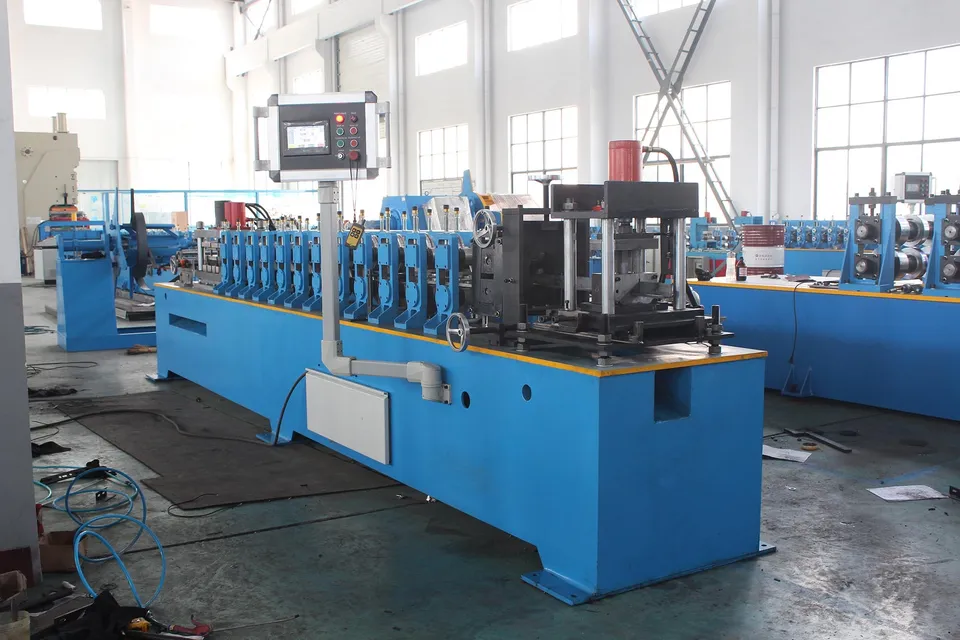
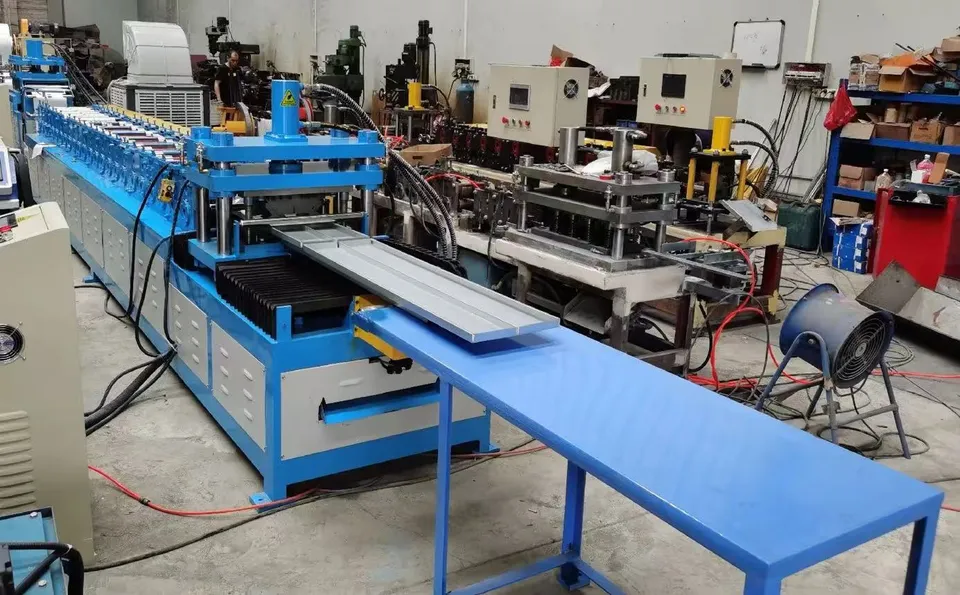
Workshop-zone views of multi-station roll forming lines and profile cutoff assemblies. Captions describe visible mechanical arrangements. They do not certify specific output or individual plant performance.
01Line layout and controls02Outfeed and sample handling
Technical clarifications on tooling design inputs, operating limits, and production feasibility.
Why is Box Profile widely utilized for residential and commercial roofing in Kenya?
Box profile generally yields wider effective coverage per sheet compared to deeper industrial profiles, allowing cost-effective roof coverage per ton of steel while maintaining structural ribs suitable for regional framing.
How can oil-canning be addressed on thin-gauge Box Profile sheets?
Oil-canning on wide flat areas can be mitigated by introducing longitudinal stiffening flutes in the valley pans and calibrating progressive roll station angles to maintain uniform tension across the sheet width.
Can the roll tooling process both galvanized and Aluzinc coils?
Yes, provided the coil thicknesses remain within the designed tooling clearance and the roller surfaces are properly finished and maintained to avoid surface scuffing.
What are the container packing arrangements for dispatch to Mombasa?
The complete machine line (uncoiler, forming chassis, hydraulic pack, PLC console, and outfeed supports) is packed and braced with structural timber and steel tie-downs inside standard ocean shipping containers.
START ENGINEERING REVIEW
Plan Your Box Profile Mabati Equipment Review with Taibang
Submit your target box profile cross-section, thickness spectrum, and workshop layout to start a comprehensive engineering review.