Longspan Continuous Roofing Roll Forming Line Guide for the Philippines
Technical evaluation and machine planning guide for Philippine metal roofing producers evaluating continuous cut-to-length Longspan roofing production. Outlines workshop floor length requirements, outfeed staging, profile straightness control, shear configuration options, and 60Hz power matching.
ENGINEERING NOTICE
Equipment configurations, tooling station counts, motor ratings, and line layouts are customized per project. All production parameters, profile tolerances, and delivery scopes are confirmed per signed project contract and agreed engineering drawings.
MARKET CONTEXT
Philippine Market Focus: The Longspan Roofing Practice
Examining operational and engineering considerations for producing continuous cut-to-length roofing panels designed to minimize horizontal lap joints.
Minimizing Transverse End-Laps
Longspan production aims to supply panels cut to the full roof run length where practical, reducing or eliminating horizontal sheet laps. This reduces potential leakage points along the roof slope during severe monsoon downpours.
Straightness & Camber Management
As panel lengths increase, any slight imbalance in roll pressure or residual strip stress can cause horizontal curvature (camber) or vertical bow. Machine engineering must provide rigid stand alignment and exit straightener adjustment to preserve panel planarity.
Runout Support & Handling Logistics
Producing extended sheet lengths requires continuous outfeed support tables to prevent sheet buckling or surface scuffing upon exit from the cutoff shear, alongside planned factory handling routes.
Mechanical design criteria and process considerations evaluated for this profile geometry.
Cutoff Mechanism Evaluation
Lines can be engineered with hydraulic stop-to-cut systems for standard production or evaluated for continuous shearing arrangements based on project cycle time targets, investment budget, and panel length distribution.
Modular Outfeed Conveyor Layout
Extended modular outfeed staging tables with non-marking rollers support the sheet as it exits the shear, keeping long panels supported and planar prior to manual or mechanical transfer.
Exit Profile Straightener Unit
Adjustable straightening mechanisms positioned after the final roll stands allow operators to fine-tune vertical and horizontal alignment, compensating for coil residual curvature on long runs.
60Hz Power & Control Matching
Electrical motors, reduction units, and PLC consoles are configured for Philippine 60Hz power supply, with automated length calibration presets via rotary encoder.
SPECIFICATION CHECKLIST
Technical Checklist: Inputs Required for Longspan Line Planning
To evaluate workshop layout feasibility, drive capacity, and outfeed staging, our engineering team requires confirmation of the following points:
• Target Profile Geometry & DrawingConfirmed CAD cross-section (Rib-Type, Corrugated, or custom cladding profile) including rib height, pitch, and effective cover width.
• Intended Sheet Length DistributionTypical and maximum planned cut lengths based on expected project contracts, to determine necessary outfeed table length and staging space.
• Workshop Floor DimensionsAvailable linear factory floor length (decoiler area, roll forming line, and outfeed runout zone) to verify material flow clearance.
• Coil Material SpecificationsSubstrate grade (PPGI, Galvalume), decimal thickness range in millimeters, and coil yield strength to determine drive sizing.
• Logistics & Handling AssessmentBuyer assessment of site transport limits, vehicle bed lengths, and lifting arrangements for handling long continuous panels.
Note: All tooling designs are confirmed via CAD section drawing prior to workshop production.
Calculated per profile geometry and material properties
Rigid stand housings maintain consistent roller alignment over extended continuous profiling runs.
Roller Tooling Material
Forged carbon steel with hard chrome plating
Surface plating protects coil finish and resists wear across high-volume production cycles.
Cutoff Shear Assembly
Hydraulic profile shear die with precision length encoder
Die contour matches target sheet section; shearing mode confirmed per production requirements.
Outfeed Staging System
Modular roller support tables with non-marking rollers
Table length and layout modularly configured to support intended panel cut lengths.
Electrical & Automation System
60Hz industrial motor package with PLC console
Equipped with digital length calibration, multi-batch settings, and emergency interlocks.
WORKSHOP VIEWS / PROJECT DISCUSSION
Look at the details. Define your requirements.
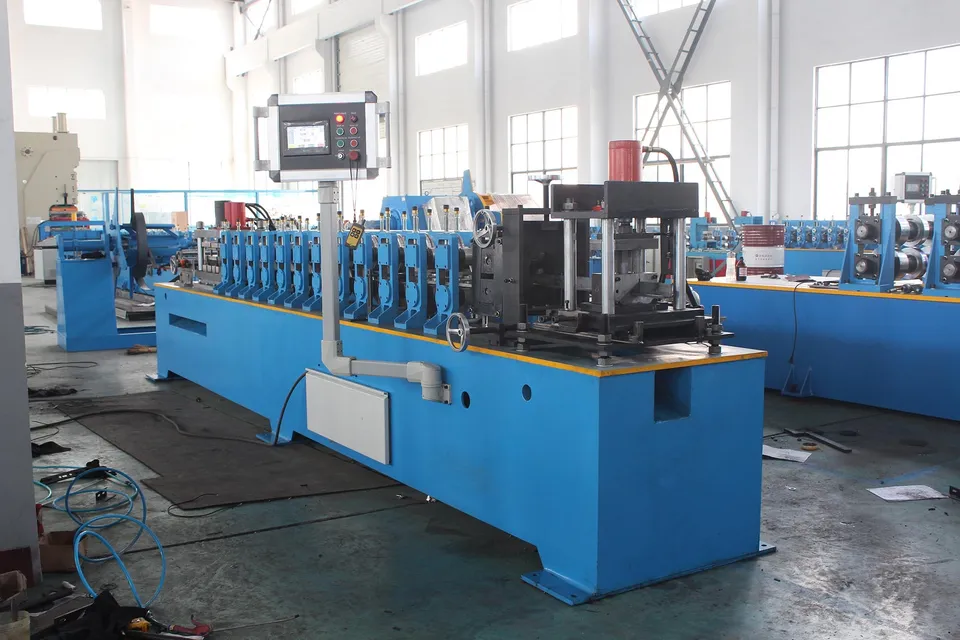
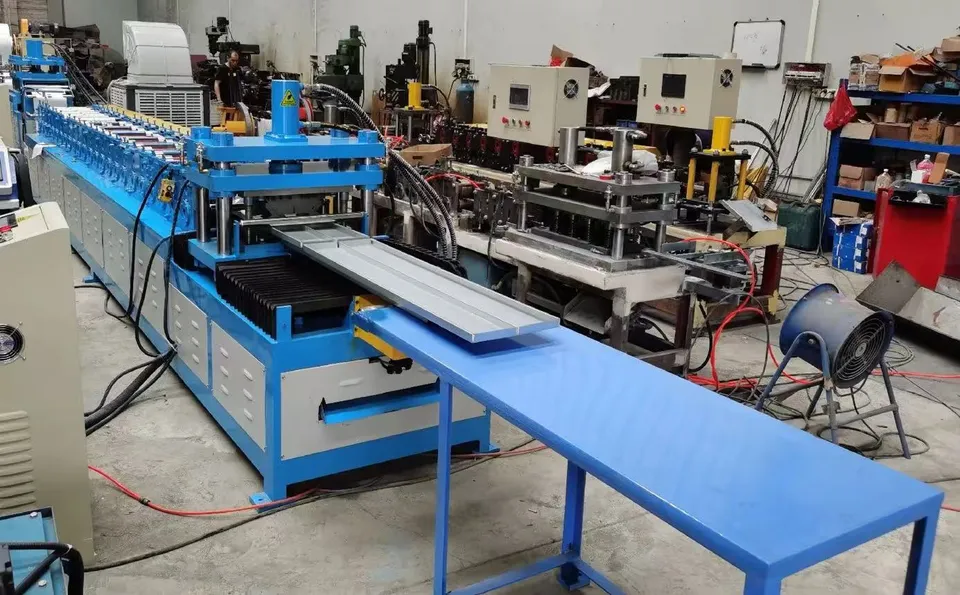
Workshop-zone views of multi-station roll forming lines and profile cutoff assemblies. Captions describe visible mechanical arrangements. They do not certify specific output or individual plant performance.
01Line layout and controls02Outfeed and sample handling
Technical clarifications on tooling design inputs, operating limits, and production feasibility.
What is the operational rationale behind Longspan roofing in the Philippines?
Longspan panels are produced to continuous lengths matching the building roof slope, eliminating transverse lap joints where driving rain could otherwise penetrate, while offering a streamlined architectural finish.
How much linear factory floor space is required for a Longspan line?
Floor space depends directly on the uncoiler capacity, machine chassis length, and maximum panel cut length. A line producing 12-meter panels generally requires at least 25 to 30 meters of clear linear length, with additional staging and handling clearance needed for longer panels.
Can Longspan machinery be configured for mobile or site-based operations?
While site-based roll forming is sometimes practiced in the industry for extremely long panels where road transport is constrained, it requires specialized compact machinery, autonomous power, and strict site leveling. Feasibility must be evaluated on a custom engineering basis against project constraints.
How is longitudinal camber controlled on extended panel lengths?
Machine lines incorporate adjustable exit straightening units and precision alignment jacks on upper shaft blocks, allowing technicians to make micro-adjustments to counteract natural coil strip camber.
START ENGINEERING REVIEW
Initiate Technical Planning for Your Longspan Project
Send your target profile CAD cross-section, expected sheet cut lengths, and workshop floor dimensions to start an engineering layout review.